


How to Vet Electrical Commercial Services Before Signing Any Contract
March 12, 2026Every summer, Cincinnati and Loveland homeowners watch their electric bills climb and assume the problem is the weather. Ohio summers are hot and humid, and yes, running your air conditioner costs money. But there is a real difference between normal seasonal costs and a system that is bleeding money because of problems that have nothing to do with the temperature outside.
If your energy bills feel out of proportion to how much cooling you are actually getting, the issue may not be your AC unit itself. It may be the electrical system feeding it.
This is where most homeowners get it wrong. They call the HVAC company, get told the unit is running fine, and go home with the same high bills. What nobody checks is whether the electrical infrastructure supporting that AC unit is doing its job. An air conditioner is only as efficient as the electrical system it is connected to, and when that system has problems, your AC pays the price and so does your wallet.
Here is a clear look at the electrical reasons your AC unit might not be as energy saving as it should be.
Your Electrical Panel May Be the Real Problem
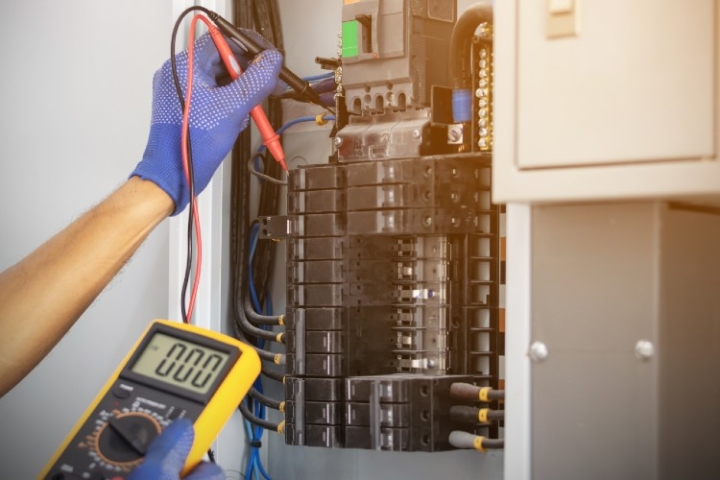
Most people think of their electrical panel as a set-it-and-forget-it piece of equipment. As long as the breakers are not tripping, the panel is fine. That logic breaks down fast when you factor in what a central air conditioner actually demands from an electrical system.
A standard central AC unit requires a dedicated 220 to 240-volt circuit and can draw anywhere from 15 to 60 amps depending on its size. That is one of the largest single electrical loads in a residential home. When the panel feeding that circuit is undersized, aging, or already close to capacity from other appliances, the AC unit does not get clean, stable power. It gets inconsistent voltage, and that forces the compressor and fan motors to work harder than they should to maintain the temperature you set.
The result is an AC unit that runs longer cycles, draws more current than it was designed to, and racks up higher energy costs without delivering better cooling.
Older homes in the Greater Cincinnati area were typically built with 60 or 100-amp service panels at a time when central air conditioning was not even part of the picture. When AC systems were added later, the panel was often never upgraded to match the new load. If your home still has a 100-amp panel and you are running central air plus a modern kitchen, multiple televisions, and a home office, your panel is likely struggling to keep up.
A panel upgrade to 200-amp service gives your air conditioner the stable, sufficient power it needs to run efficiently. It is not just a safety upgrade. For many Loveland and Cincinnati homeowners, it is directly connected to whether their AC unit can function as a genuinely energy saving system or just a very expensive one.
Your AC Unit Needs Its Own Dedicated Circuit
Sharing is fine in most situations. It is not fine when it comes to your air conditioner’s electrical circuit.
The National Electrical Code requires that central air conditioning systems be installed on a dedicated circuit, meaning a circuit that serves only the AC unit and nothing else. This is not a suggestion. It is a code requirement, and it exists because of how much power an AC unit draws, particularly during startup when the compressor kicks on.
When an AC unit shares a circuit with other appliances or outlets, a few things happen. First, the combined load can push that circuit close to or past its limit, causing the breaker to trip. Second, and more relevant to your energy bill, the shared load creates voltage fluctuations that force the AC’s motors to compensate. Those motors are not built to handle inconsistent power delivery. Over time, they degrade faster and run less efficiently.
Some older homes in Loveland, Cincinnati, and the surrounding communities were wired long before energy saving AC units with high-efficiency ratings became standard. That wiring was never designed to carry the loads modern AC equipment demands. If your air conditioner was installed without a proper dedicated circuit, or if the circuit it is on was not correctly sized for the unit, you are likely paying more than you should every month.
Having a licensed electrician verify that your AC has a correctly sized, properly dedicated circuit is one of the more straightforward fixes that can have a real impact on what you pay to cool your home.
Wiring That Cannot Keep Up
The wire running from your panel to your AC unit matters more than most homeowners realize. If that wiring is undersized for the amperage your system draws, or if it is old enough that the insulation has degraded, you are dealing with resistance in the circuit. Resistance means energy is lost as heat before it even reaches the AC unit. The unit then has to draw more current to compensate for what is being lost in transmission.
Older homes, particularly those built before the 1970s, sometimes still have aluminum branch circuit wiring or cloth-insulated wiring that was never updated when the HVAC system was installed or replaced. Neither is well suited to power a modern AC system safely or efficiently. Aluminum branch circuit wiring in particular is prone to expansion and contraction that loosens connections over time, and loose connections are a source of both energy waste and fire risk.
Even in homes with copper wiring, if the gauge was not correctly matched to the amperage of the AC circuit, you end up with the same resistance problem. The wire gets warm, power is wasted, and the air conditioner has to work harder for the same output.
This is not something you can diagnose by looking at your breaker box. It requires a licensed electrician to trace the circuit, inspect the wiring condition, and confirm that everything from the panel to the disconnect to the unit itself is correctly matched and in good shape.
The Disconnect Box and Why It Matters
Right outside most central air conditioners, you will find a small metal box mounted on the exterior wall of the house. That is the AC disconnect. Its job is to allow the unit to be safely de-energized for service without requiring a trip back to the main panel.
What most homeowners do not know is that the disconnect can also be a source of efficiency problems. A disconnect that was installed incorrectly, has loose internal connections, or is undersized for the unit it serves creates resistance in the power supply to your AC. The same way a partially blocked hose reduces water pressure, a compromised disconnect reduces the quality of power delivery to your system.
Disconnect boxes are not expensive, and replacing one that has seen better days takes a licensed electrician a short amount of time. But if yours is contributing to power losses, the cost of leaving it in place adds up across an entire cooling season.
Smart Thermostats Need Correct Wiring to Actually Save You Money
A smart thermostat is one of the most commonly cited ways to turn your AC into a more energy saving unit. The theory is sound. Smarter temperature scheduling, remote access, and more precise cycling should mean your AC runs only when it needs to and not a minute longer.
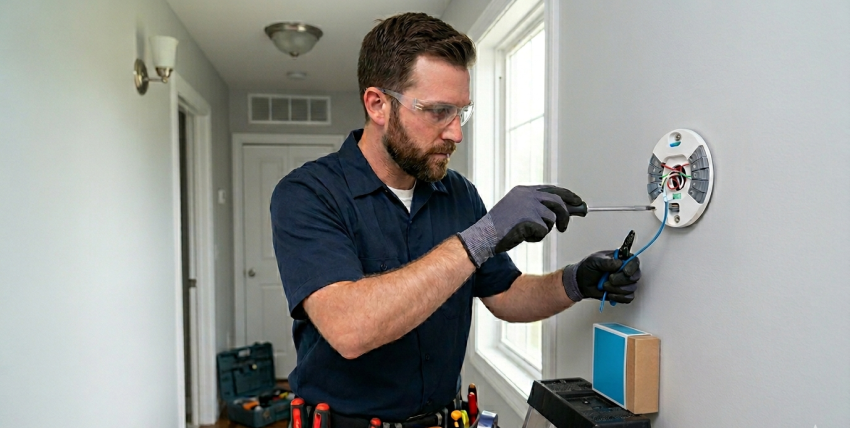
The problem is that smart thermostats require a specific wiring setup to work correctly, and not every home has it. Most smart thermostats need a common wire, often called a C-wire, to maintain consistent power to the device. Without a C-wire, the thermostat may draw parasitic power from other wires in the system, which can cause the AC to short cycle, behave erratically, or not communicate properly with the air handler.
When a smart thermostat is installed without the correct wiring, the energy saving benefits people expect from the upgrade simply do not materialize. In some cases, the AC actually runs less efficiently than it did with a basic programmable thermostat because the unit is cycling improperly.
If you had a smart thermostat installed and your bills did not improve, or got worse, the wiring is worth having checked by an electrician before you blame the thermostat or the AC unit itself.
Voltage Irregularities from an Overloaded System
This one is subtle but worth understanding. When a home’s electrical system is consistently operating close to its capacity limit, the voltage delivered to individual circuits can fluctuate. AC units are sensitive to voltage. Most central air systems are rated for 220 to 240 volts and are designed to operate within a fairly narrow window around that rating.
When voltage drops because the panel is overloaded, the compressor in your AC draws more current to make up the difference. More current through the same components means more heat, more wear, and higher energy consumption. It also shortens the lifespan of the compressor, which is the most expensive component in the system.
Homeowners in older Cincinnati and Loveland neighborhoods who have added appliances, home office equipment, EV chargers, or other high-draw devices over the years without upgrading the panel are most at risk for this kind of creeping inefficiency. The AC unit did not change. The load on the system did, and the AC is paying for it in efficiency losses.
What You Can Do About It
The good news is that every one of these electrical issues is fixable. A panel upgrade, a dedicated circuit, a wiring inspection, a disconnect replacement, or a thermostat wiring correction each addresses a specific failure point that is costing you money.
None of these are DIY projects. Ohio electrical code requires permits and licensed electricians for this kind of work, and the consequences of getting it wrong go beyond inefficiency. Overloaded or improperly wired circuits are a leading cause of residential electrical fires.
The smarter path is to have a licensed electrician look at how your home’s electrical system is actually supporting your AC. In most cases, the problems are not dramatic. A dedicated circuit that was never installed. A panel that has not been touched since 1985. A disconnect with a loose connection. Wiring that was sized for a different unit. These are straightforward issues with straightforward solutions, and fixing them can meaningfully reduce what you pay to cool your home every summer.
If you have replaced your AC unit in the last few years and your bills still seem high, or if you are planning a replacement and want to make sure you get the efficiency you are paying for, start with the electrical side. The best energy saving AC unit on the market will not perform the way it should if the wiring and panel behind it are holding it back.
Explore our electrical upgrades services to make sure your home’s electrical system is set up to support your AC properly, or call us at (513) 575-4900 to talk through what your home needs before another summer of high bills.